Skip to content

Archive

Apache

3 articles
Cybersecurity Updated 10 Sep 2025 2 min read

How to Whitelist IP Address Ranges with .htaccess

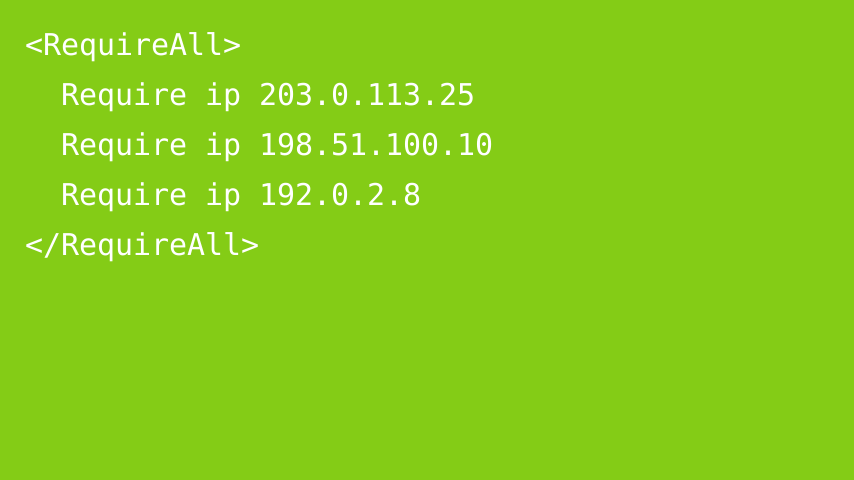
.htaccess is useful for more than URL rewriting and caching. It can also provide an additional access-control layer, including restricting an application to specific IP addresses or IP ranges. This technique can be useful when: An application is still in development and should only be available to an internal team. You want to protect sensitive paths such as /admin or /api. A server should only be reachable from an office network or VPN. Whitelist One IP Address To allow only one IP address:

Cybersecurity Updated 10 Sep 2025 2 min read

How to Block IP Ranges with `.htaccess`

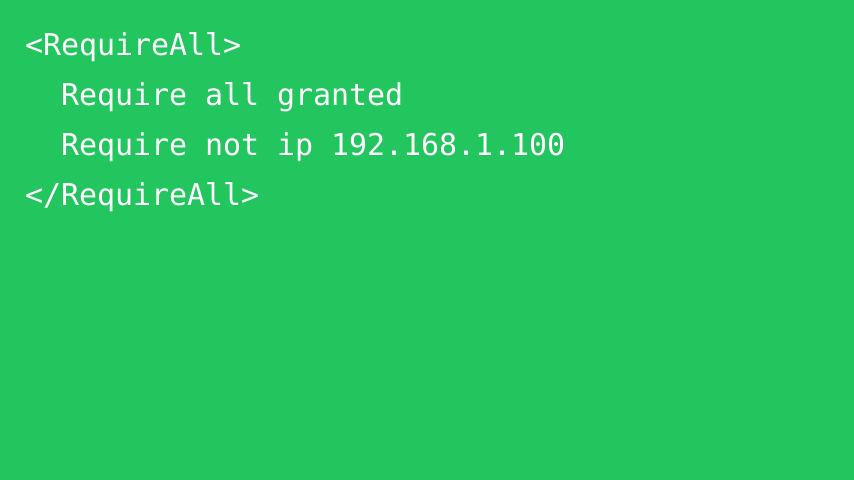
One useful feature of Apache is the flexibility of .htaccess. In addition to URL rewriting and caching rules, .htaccess can also restrict access based on IP addresses. If you are dealing with spam bots, brute-force attempts, or unwanted traffic from a particular network, one quick option is to block an individual IP address or an entire range. Block a Single IP Address To block one IP address, use: <RequireAll> Require all granted Require not ip 192.168.1.100 </RequireAll> This blocks 192.168.1.100 while allowing other clients to access the site.

Cybersecurity 03 Sep 2025 3 min read

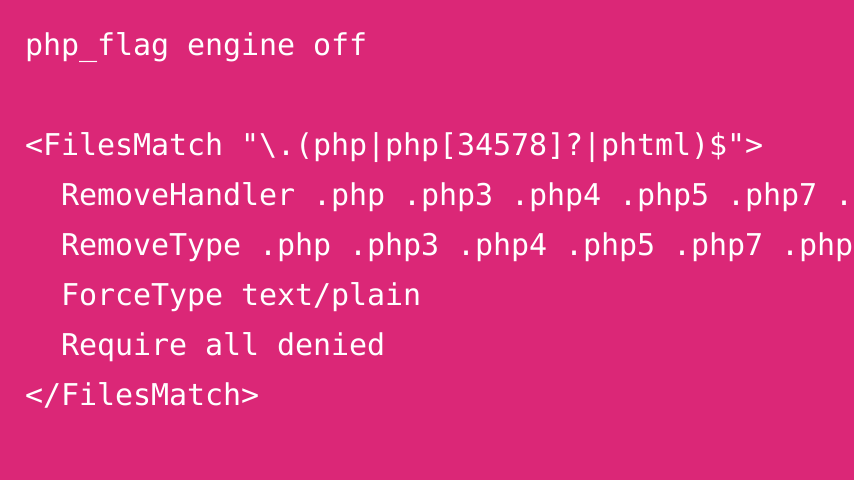
.htaccess Rules to Prevent PHP Execution

Public upload directories are a common security-sensitive part of web applications. If an attacker manages to upload a file such as shell.php and the web server executes it, the upload feature can become a route to remote code execution. On Apache, a directory-specific .htaccess configuration can help prevent script execution in locations that should contain only static files. Why .htaccess Can Help Apache supports .htaccess files for directory-level configuration when the server permits the relevant overrides. This makes it possible to apply security rules to a specific directory without changing every virtual-host setting.