Skip to content

Archive

Systemd

4 articles
Linux 01 Sep 2026 6 min read

Troubleshooting systemd Services with systemctl and journalctl

When a Linux service fails under systemd, the fastest path to a fix is usually not restarting it repeatedly. A better approach is to inspect the service state, read the relevant logs, confirm the effective unit configuration, and validate changes before trying again. This guide presents a repeatable troubleshooting workflow for modern Linux distributions that use systemd. The examples use commands available in systemd 257, but the core workflow also applies to many earlier systemd releases.

Linux 01 Sep 2026 2 min read

Troubleshoot Linux Services with systemd and journalctl

On systemd-based Linux distributions, a service that “will not start” can fail for many reasons: an invalid command, missing file, permission problem, dependency failure, timeout, or application crash. A repeatable workflow is faster than repeatedly restarting the unit. Start with unit state systemctl status example.service Look at Loaded, Active, the main process exit status, and the most recent log lines. A unit can be loaded correctly while its process exits immediately.

Linux 01 Sep 2026 5 min read

Harden systemd Services with Security Directives

A systemd unit can do more than start and restart a process. It can also define a security boundary around the service by restricting filesystem access, Linux capabilities, namespaces, privilege changes, and resource consumption. These controls do not replace application security, but they can reduce the damage caused by a compromised or misbehaving process. Start from the service’s real requirements Hardening works best when it is based on what the process actually needs.

Go Updated 02 Sep 2025 2 min read

Deploy a Go Web Server with systemd on Linux

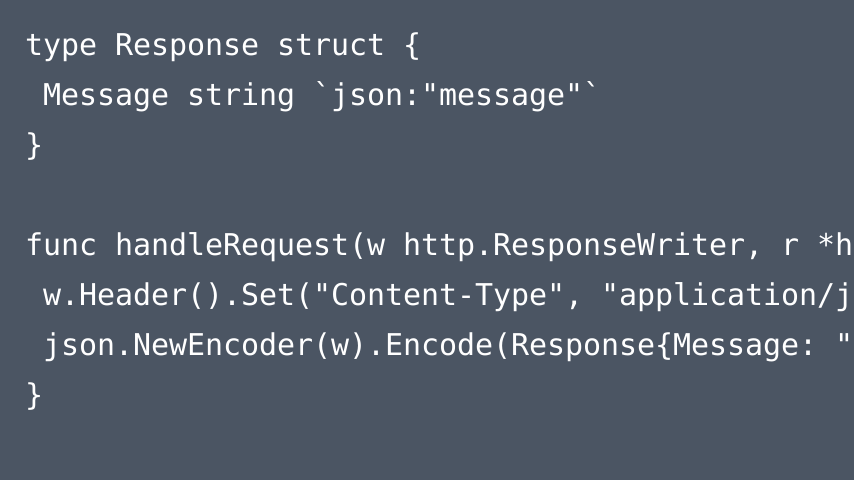
When developing a small Go web server, it is common to run it manually with go run main.go. The problem is that the process stops when the terminal closes, and it will not automatically return after a server reboot. A better production setup is to run the application as a systemd service. That gives you automatic startup, monitoring, service management, and optional restart behavior after failures. 1. Create a Simple Go Web Server Start with a minimal HTTP server: